
Pancreatitis is a condition that occurs when the pancreas—an important gland located behind the stomach—becomes inflamed. The pancreas plays a vital role in digestion by producing enzymes that help break down food. It also produces hormones like insulin and glucagon that help regulate blood sugar levels.
Pancreatitis can occur suddenly and last for a short time (acute pancreatitis), or it can develop gradually and persist over many years (chronic pancreatitis). Both forms can be serious and may lead to complications if not properly managed.

Acute Pancreatitis
This form develops quickly, typically causing severe abdominal pain, often accompanied with nausea and/or vomiting. It may be triggered by factors like gallstones, heavy alcohol use, certain medications, or infections. Most people recover fully with proper treatment, but in severe cases, it can cause life-threatening complications.
Chronic Pancreatitis
This long-lasting condition typically results from repeated bouts of acute pancreatitis, most commonly due to prolonged alcohol use. Over time, the pancreas can become permanently damaged, leading to digestive issues and difficulties regulating blood sugar, potentially resulting in diabetes.
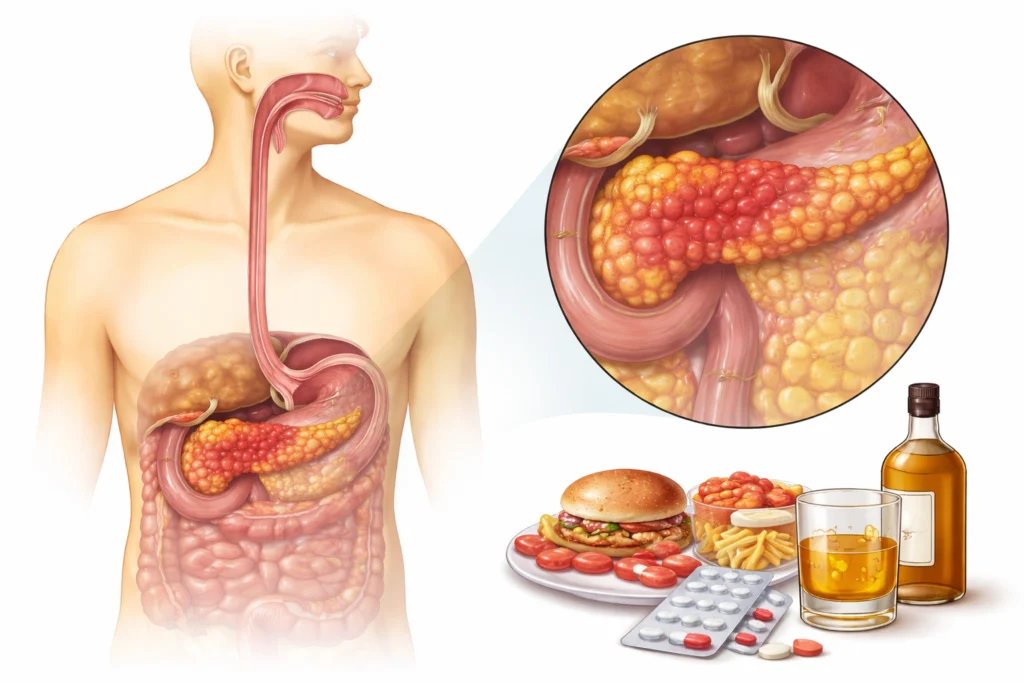
Pancreatitis is more than just inflammation—it can have serious short- and long-term effects on your health. Without proper diagnosis and treatment, pancreatitis can lead to severe complications that impact not only your digestive system but also your overall well-being.
In some cases, parts of the inflamed pancreas can become infected or develop fluid-filled sacs called pseudocysts. If these become infected, they can lead to life-threatening conditions like sepsis—a medical emergency that requires urgent treatment.
With chronic pancreatitis, ongoing inflammation slowly damages the pancreas over time. This damage can become permanent, leading to a loss of the pancreas’s ability to produce digestive enzymes and hormones. As a result, patients may experience:
Long-standing inflammation from chronic pancreatitis is also a known risk factor for pancreatic cancer, one of the most aggressive and difficult-to-treat cancers. While not everyone with pancreatitis will develop cancer, the risk is higher in those with chronic, long-term inflammation—particularly if combined with risk factors like smoking or heavy alcohol use.
Acute Pancreatitis:
Chronic Pancreatitis: