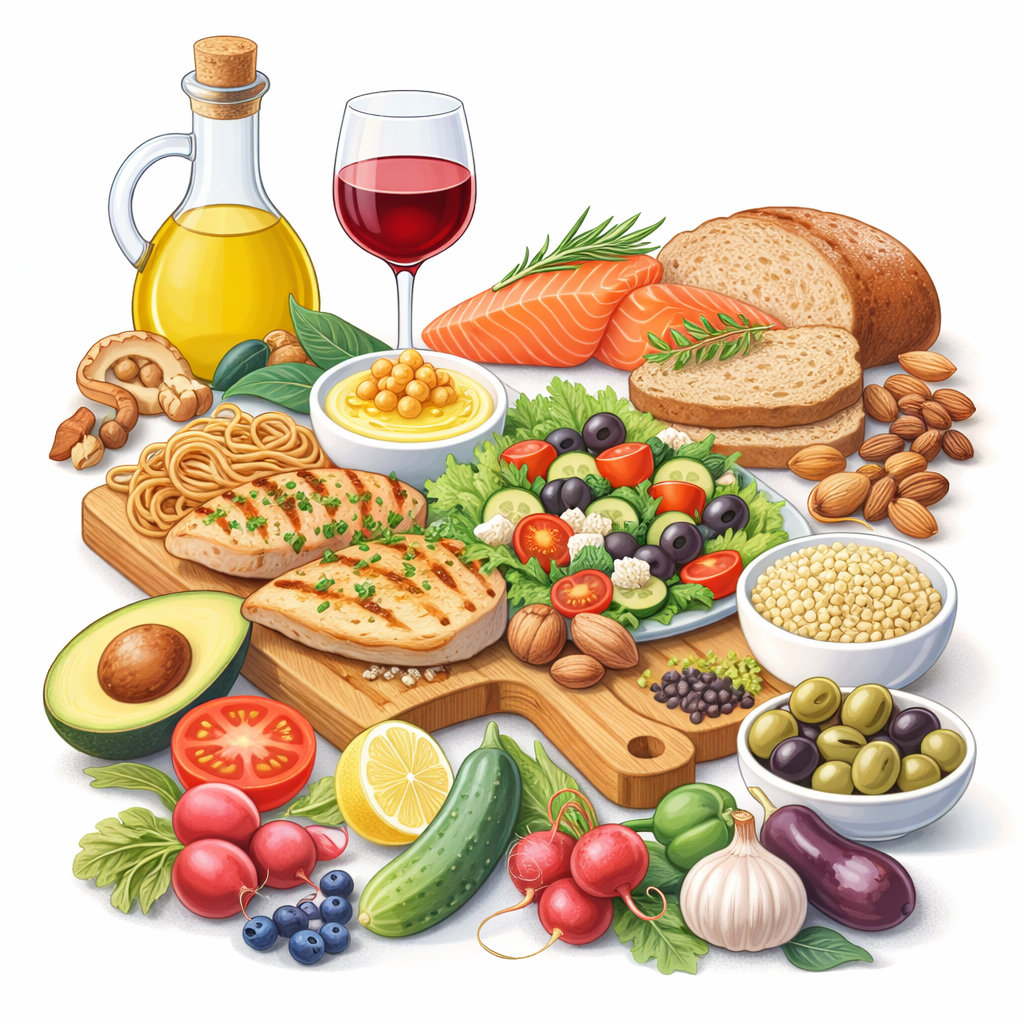
The Mediterranean diet is a flexible, plant-forward eating pattern inspired by traditional diets of countries bordering the Mediterranean Sea. It emphasizes whole, minimally processed foods, with an abundance of fruits, vegetables, whole grains, legumes, nuts, and healthy fats — especially olive oil.
Unlike restrictive diets, it promotes balance and variety, with moderate consumption of fish, poultry, dairy, and red wine (in moderation), and limited intake of red meat and sweets.
Why It Matters
Research shows it supports heart health and helps with metabolic issues by improving high blood pressure, obesity, cholesterol levels, and insulin resistance. It may also help prevent cancer. Studies suggest it can reduce the risk of heart attacks, strokes, and type 2 diabetes, and may even support brain health by lowering the risk of cognitive decline and depression.
Key Components
Healthy fats: Olive oil, nuts, seeds, avocado
Lean proteins: Fish (especially fatty fish), poultry, legumes
Whole grains: Brown rice, oats, whole wheat, barley, farro
Fruits and vegetables: Fresh, seasonal, and diverse
Dairy in moderation: Cheese, yogurt
Herbs and spices: Used instead of salt for flavor
Wine (optional): In moderation, usually with meals