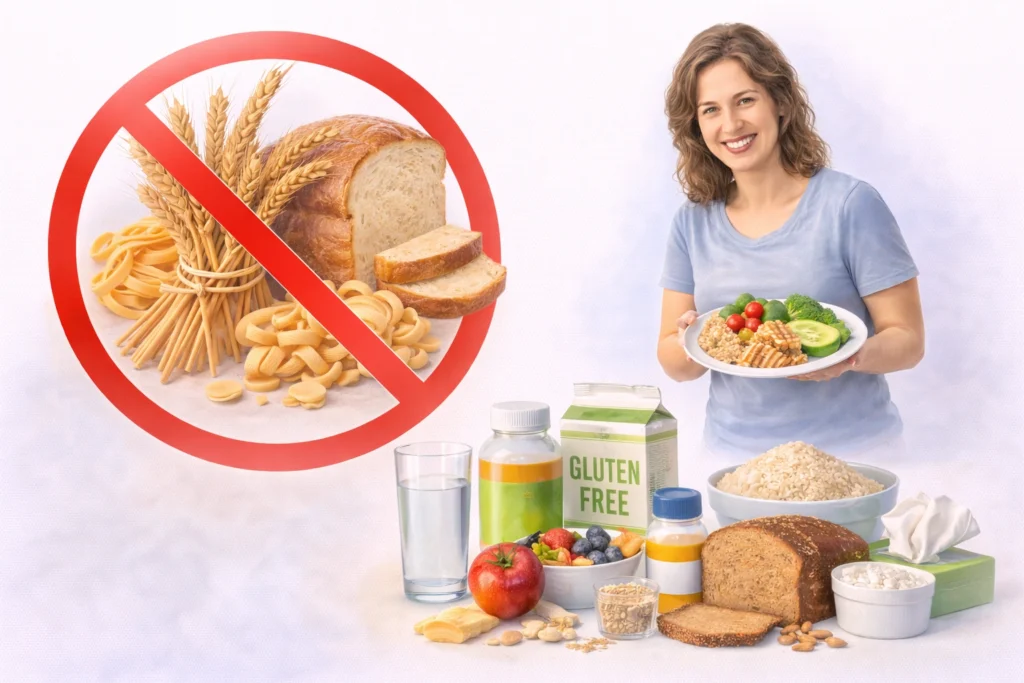
A gluten-free diet eliminates all foods that contain gluten, a protein found in wheat, barley, rye, and their derivatives such as triticale, a cross between wheat and rye. This diet is essential for people with celiac disease, a serious autoimmune condition triggered by gluten. It may also benefit individuals with non-celiac gluten sensitivity or wheat allergy.
Going gluten-free involves more than avoiding bread and pasta — gluten can hide in sauces, soups, snacks, and even medications or supplements.
Why it Matters
In people with celiac disease, consuming gluten damages the small intestine lining, leading to nutrient malabsorption, digestive symptoms, and systemic issues. A strict, lifelong gluten-free diet is the only treatment. For those with gluten sensitivity, avoiding gluten may reduce symptoms like bloating, fatigue, brain fog, and joint pain.
Naturally Gluten-Free Foods
Fresh Fruits and vegetables: Canned, dried, and frozen versions may have ingredients with gluten in them.
Oats: Although oats do not naturally contain gluten, they are often grown, processed, or transported alongside wheat, barley, and rye, leading to cross-contamination. When introducing oats into a gluten-free diet, it’s important to choose products labeled as gluten-free to ensure safety.
Always read labels and look for “gluten-free” certification.
Choose whole, unprocessed foods
Ensure adequate intake of fiber, iron, calcium, and B vitamins
Work with a dietitian to ensure nutritional balance