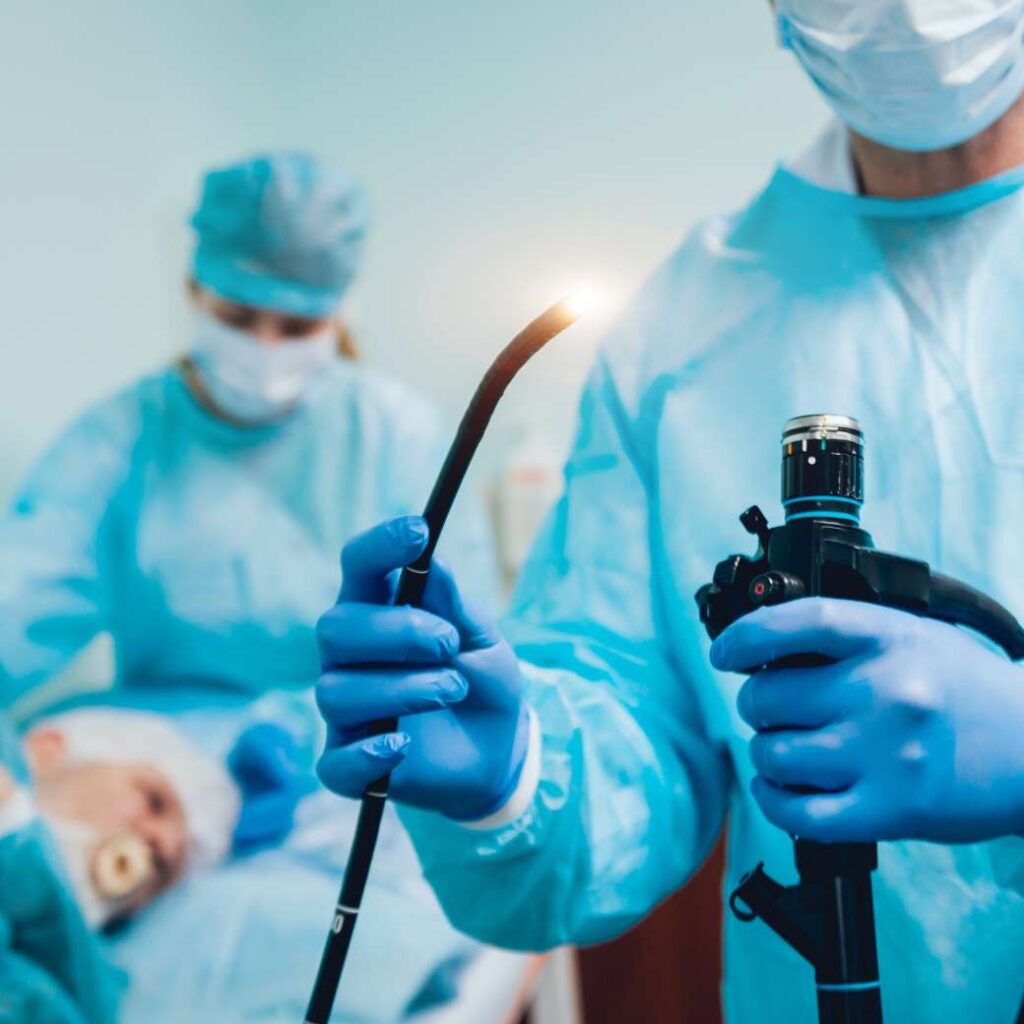
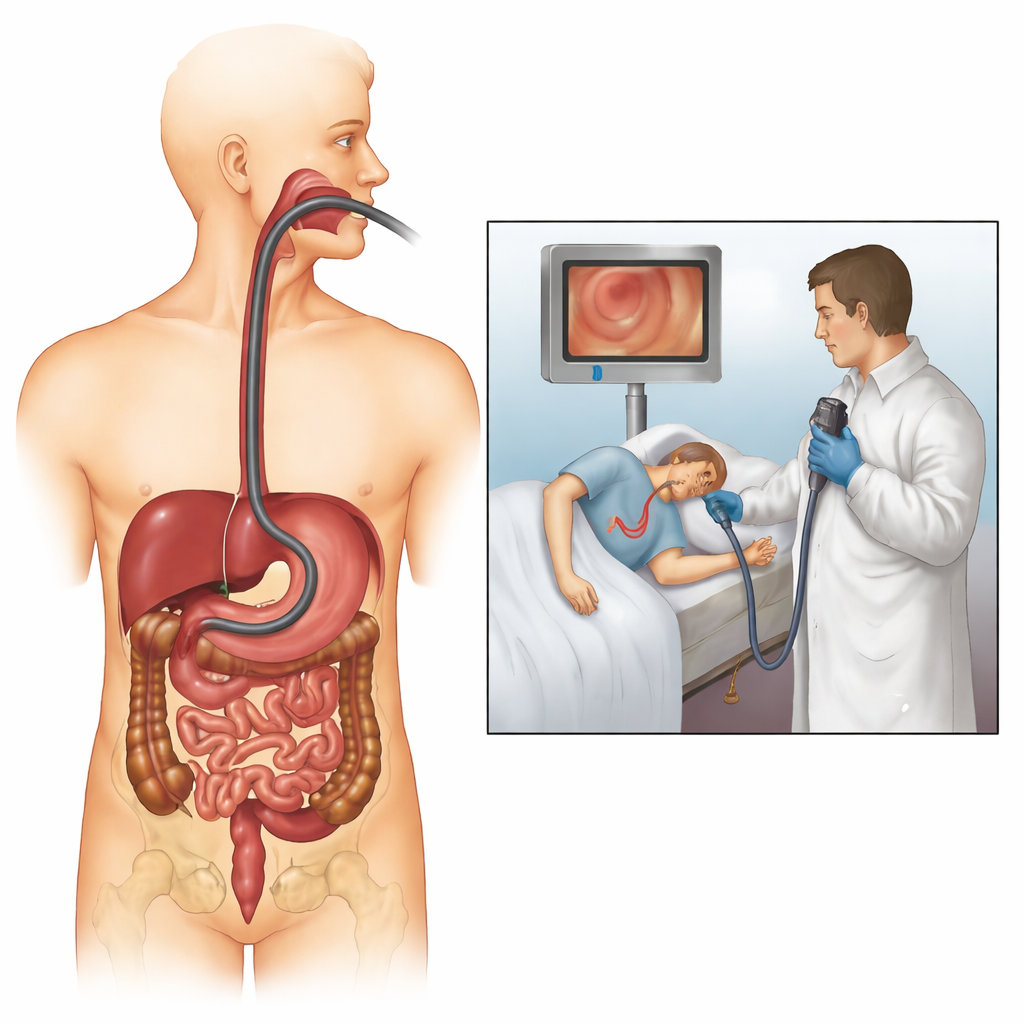
Upper endoscopy – Esophagogastroduodenoscopy, or upper endoscopy, is a procedure that allows direct visualization of the upper part of the gastrointestinal tract, which includes the esophagus, stomach, and duodenum (the first portion of the small intestine). During this procedure, a thin, flexible tube called an endoscope—equipped with its own lens and light source—is inserted through the mouth and advanced to the beginning of the small intestine. It is commonly used to help doctors evaluate symptoms such as persistent upper abdominal pain, nausea, indigestion, vomiting, and difficulty swallowing.
Why It Matters
It is an excellent test for identifying and treating the source of bleeding from the upper gastrointestinal tract. During the endoscopy, small tissue samples, known as biopsies, can be taken using special tools inserted through the endoscope. These biopsies are sent to a laboratory for microscopic analysis, allowing for a more accurate diagnosis of various conditions. Proper preparation is crucial for the success of the procedure.