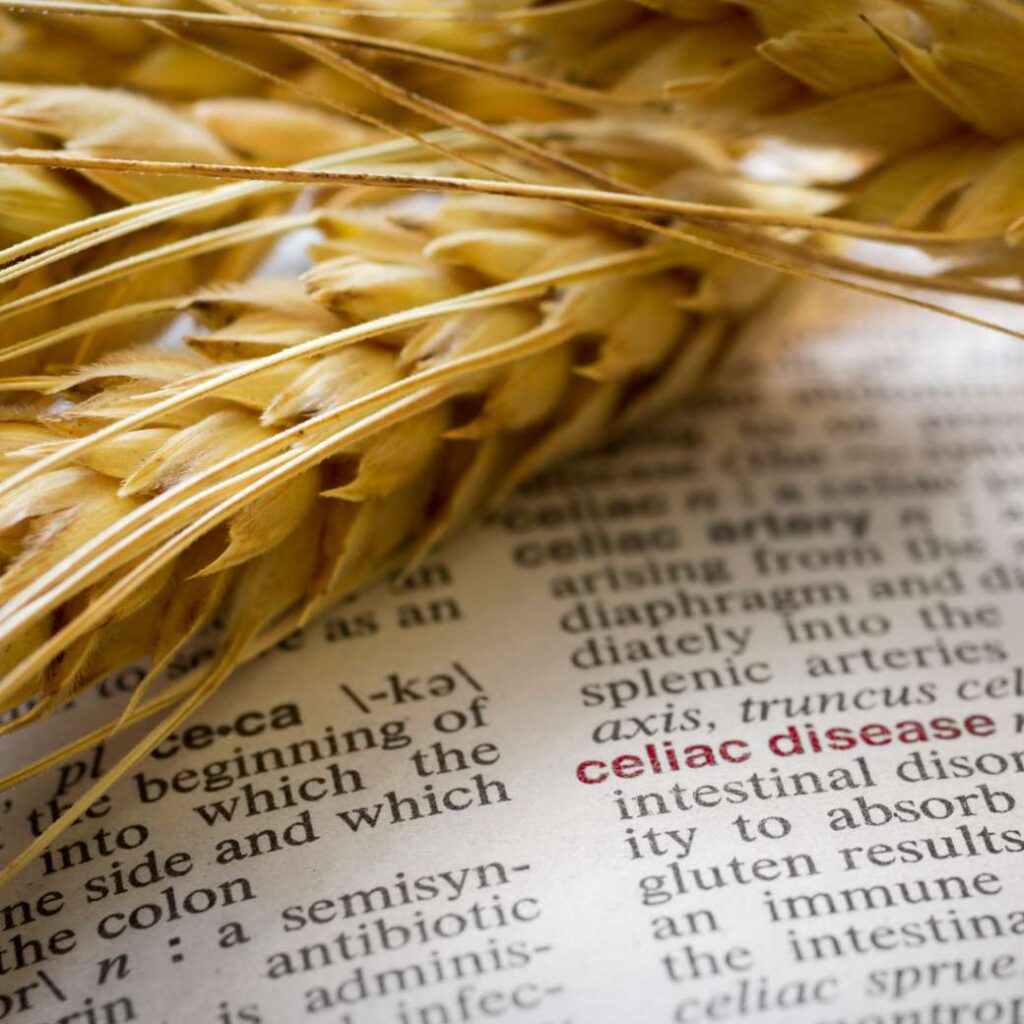
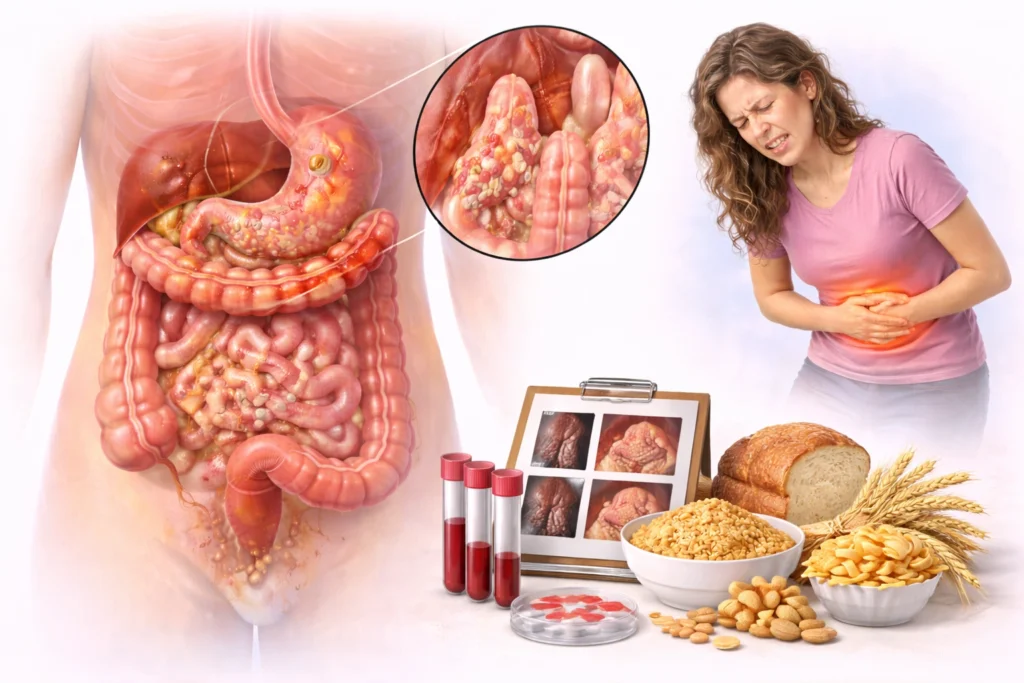
Celiac disease is a chronic autoimmune disorder in which the ingestion of gluten—a protein found in wheat, barley, and rye—triggers an immune response that damages the lining of the small intestine. This damage affects nutrient absorption and can lead to a wide range of symptoms and complications. It is not the same as a wheat allergy or gluten sensitivity; celiac disease involves a measurable immune-mediated attack on the intestinal villi.
The condition can develop at any age and often runs in families. If left undiagnosed or untreated, celiac disease can cause long-term health problems such as malnutrition, anemia, infertility, osteoporosis, heart disease, and an increased risk of certain cancers. Fortunately, once diagnosed, the condition can be effectively managed with strict adherence to a lifelong gluten-free diet.
Celiac disease is more common than once thought, affecting about 1% of the population worldwide. People with celiac disease have twice the risk of developing coronary heart disease and four times the risk of developing small bowel cancers.Because it can present with both digestive and non-digestive symptoms—or even be asymptomatic—it often goes undiagnosed. Early recognition and treatment are key to preventing complications.
Common Symptoms
Chronic diarrhea or constipation
Abdominal pain and bloating
Fatigue
Weight loss
Iron-deficiency anemia
Skin rashes (e.g., dermatitis herpetiformis)
Delayed growth in children
Diagnosis
Blood tests (tTG-IgA and other antibodies)
Endoscopy with biopsy of the small intestine (to confirm villous atrophy)
Genetic testing for HLA-DQ2/DQ8 (optional in ambiguous cases)
Note: Patients must be eating gluten regularly before testing to ensure accurate results.
Treatment
Strict gluten-free diet for life.Even ingesting small amounts of gluten like crumbs from a toaster can trigger inflammation.
Nutritional support to correct deficiencies (iron, calcium, vitamin D, B12, etc.)
Regular follow-up with a healthcare provider and possibly a dietitian
Screening of family members if one person is diagnosed. People with a first-degree relative (parent, child, or sibling) who has celiac disease have a 1 in 10 risk of developing the condition themselves.