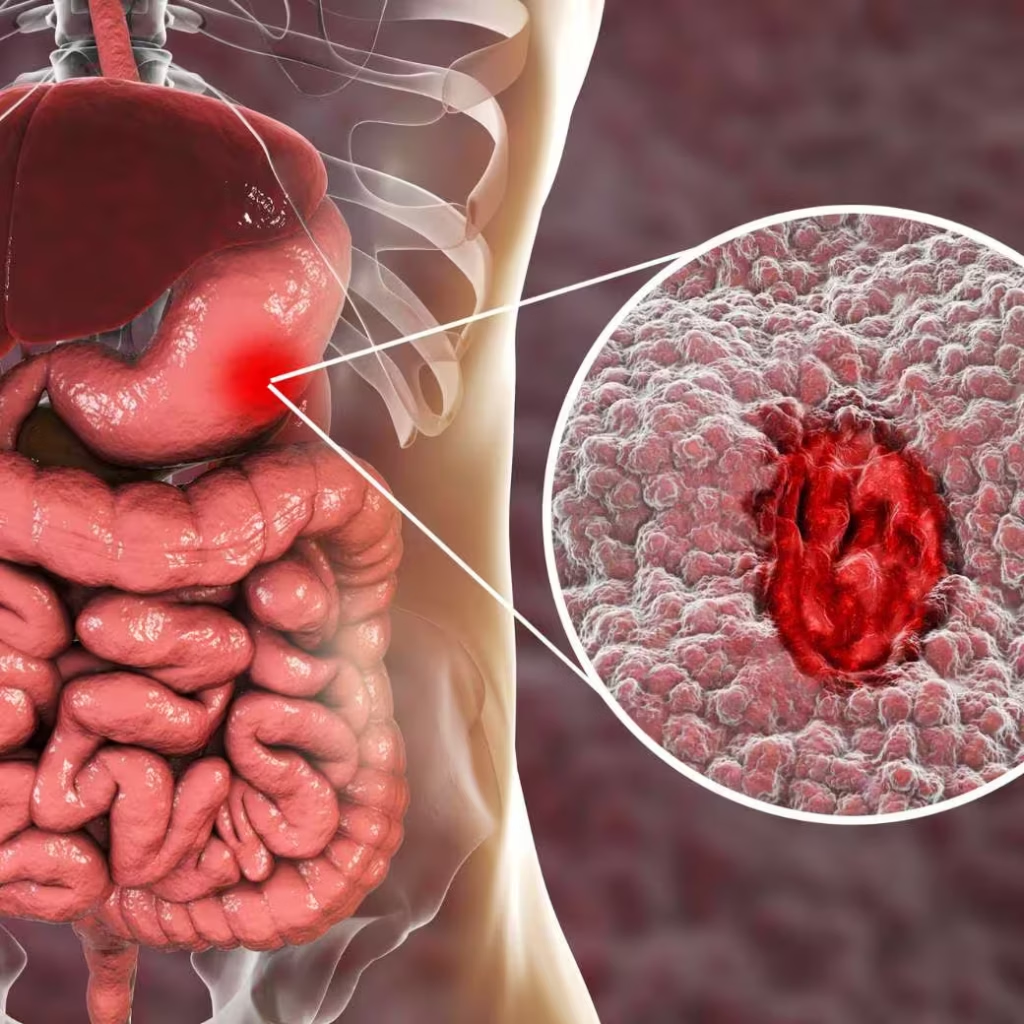
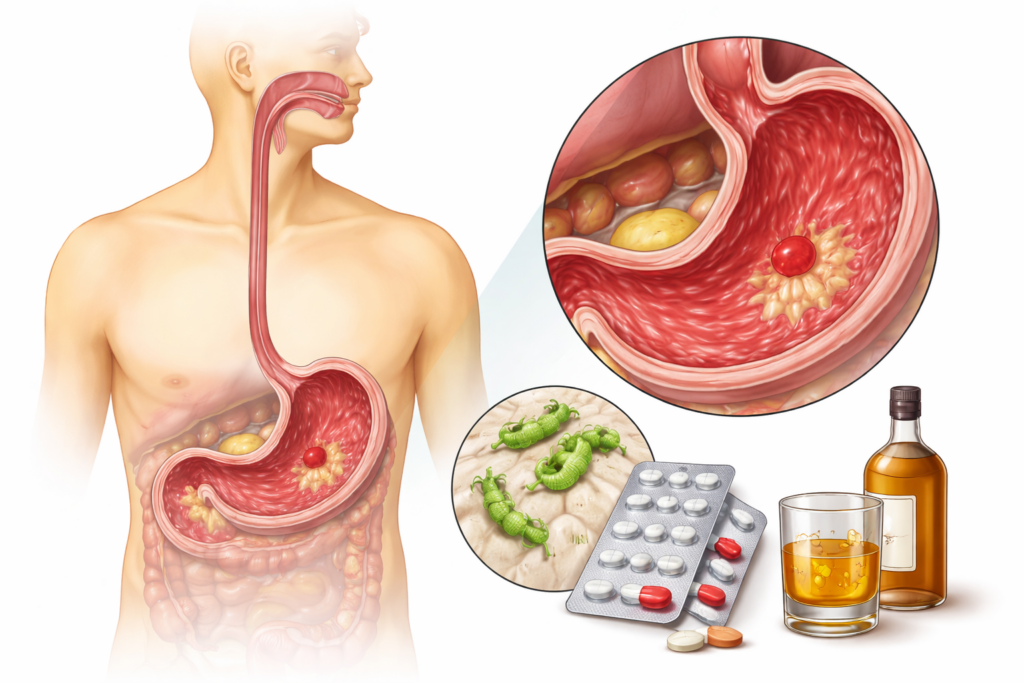
La enfermedad de úlcera péptica (EUP) se refiere a llagas abiertas que se desarrollan en el tejido interno del estómago (úlceras gástricas) o en la parte superior del intestino delgado (úlceras duodenales). Estas úlceras se producen cuando la capa protectora que recubre el estómago o el duodeno se debilita, permitiendo que el ácido gástrico cause daño al tejido.
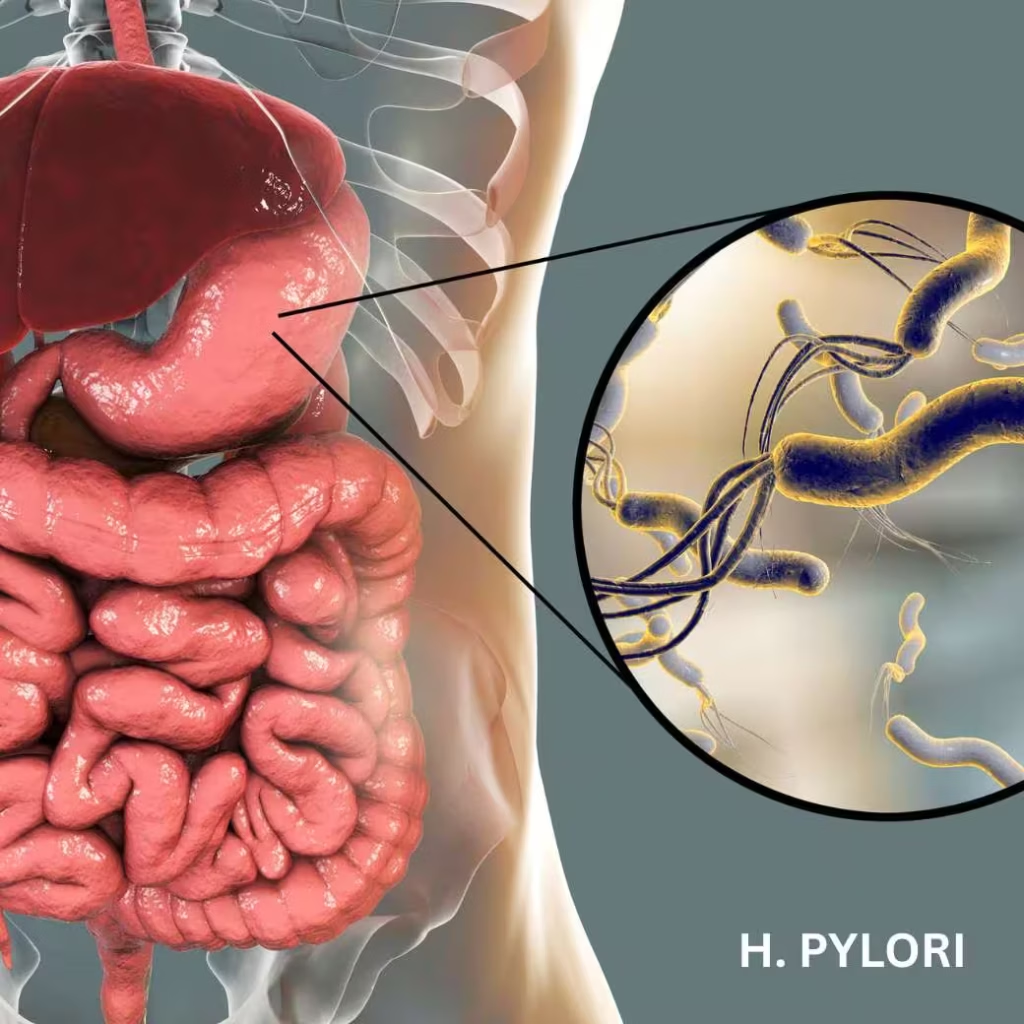
Las causas más frecuentes son la infección por Helicobacter pylori (H. pylori) y el uso a largo plazo de antiinflamatorios no esteroideos (AINE) como el ibuprofeno, el naproxeno, el diclofenaco y la aspirina. Contrariamente a las viejas creencias, el estrés y los alimentos picantes no suelen provocar úlceras, pero pueden agravar las ya existentes.
¿Por qué es importante?
Si no se tratan, las úlceras pépticas pueden provocar complicaciones como hemorragias internas, perforación (un orificio en el estómago o el intestino) u obstrucción del sistema digestivo. El diagnóstico y el tratamiento son esenciales para prevenir estas consecuencias y favorecer la sanación.
Síntomas comunes
Ardor de estómago (especialmente entre comidas o por la noche)
Náuseas o vómitos
Hinchazón abdominal
Dispepsia o indigestión
Heces oscuras o negras (signo de hemorragia)
Fatiga (por pérdida de sangre)
Diagnóstico
Uso de AINE (antiinflamatorios no esteroideos)
Pruebas de detección de H. pylori (prueba del aliento con urea, prueba del antígeno en heces o biopsia durante la endoscopia)
Endoscopia (visualización directa y biopsia de la úlcera)
Opciones de tratamiento
Erradicación de H. pylori si está presente (antibióticos y supresión de ácidos)
Inhibidores de la bomba de protones (IBP) o bloqueantes H2 para reducir la producción de ácido
Descontinuación de los AINE y cambio a opciones de manejo del dolor más seguras que no irriten el estómago
Cambios en el estilo de vida: Evite fumar y limite el alcohol