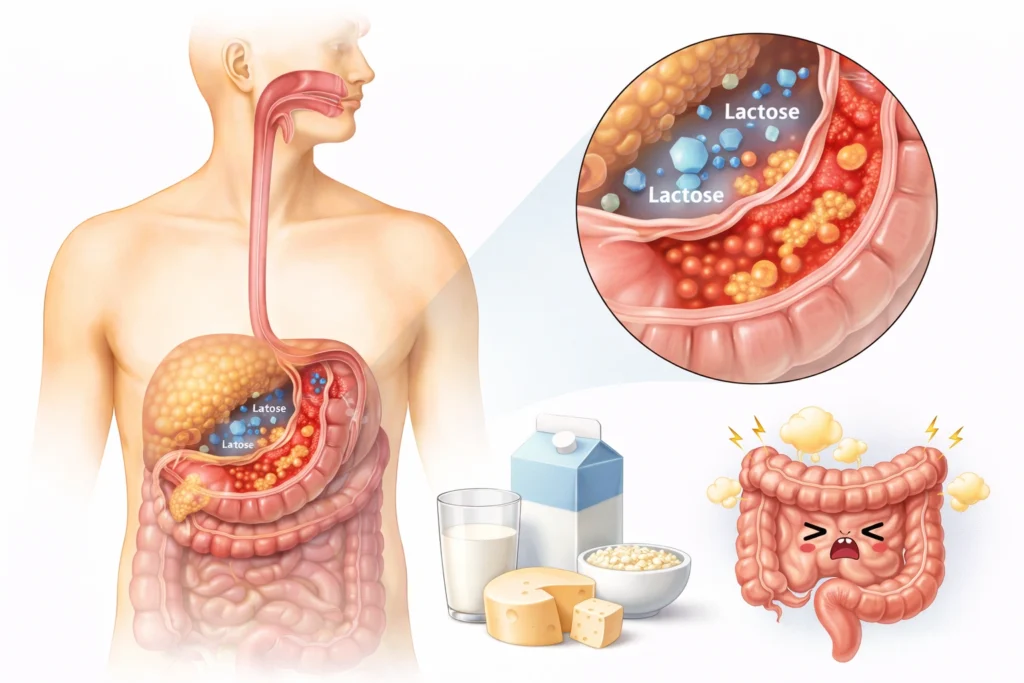
Lactose intolerance is the inability to fully digest lactose, the sugar found in milk and other dairy products. It occurs when the small intestine does not produce enough of the enzyme lactase, which is needed to break down lactose. As a result, undigested lactose passes into the colon, where it is fermented by bacteria—causing uncomfortable symptoms.
This condition is common and may be temporary or long-term. It can develop with age, after gastrointestinal infections, or as a secondary effect of conditions like celiac disease or Crohn’s disease. While it’s not dangerous, it can greatly affect quality of life if not managed appropriately.
Why It Matters
Lactose intolerance affects millions of people worldwide and can interfere with daily life if undiagnosed or untreated. Although it is not a food allergy and does not involve the immune system, its symptoms can significantly limit dietary choices and lead to nutritional deficiencies if dairy intake is severely restricted.
Common Symptoms
Bloating
Diarrhea
Gas
Abdominal cramps
Nausea (especially after eating or drinking dairy)