
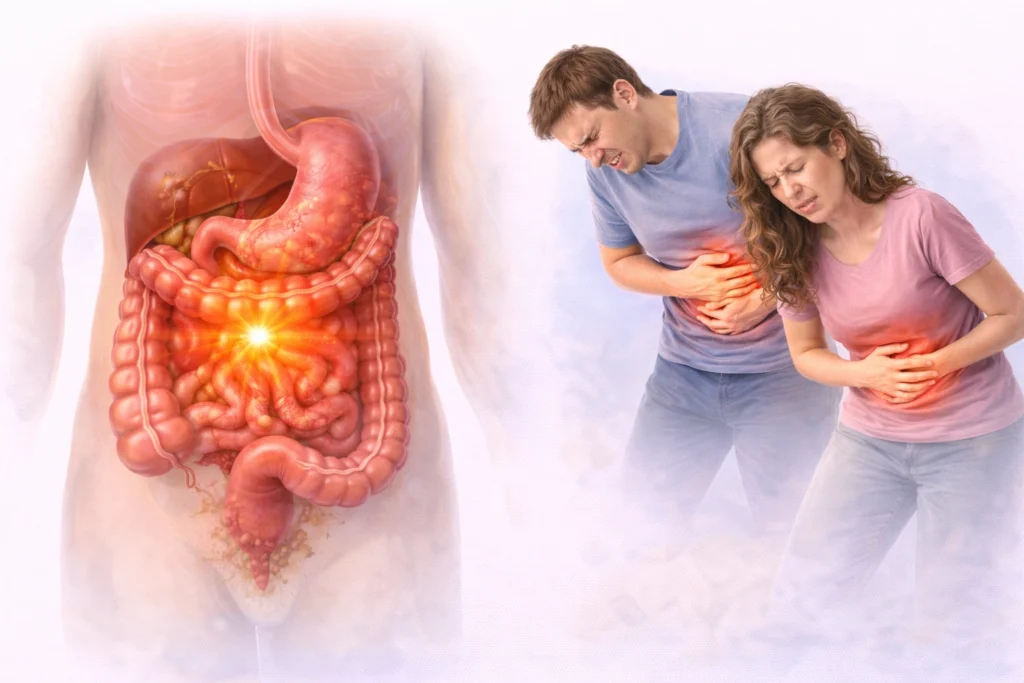
El dolor abdominal se refiere a cualquier molestia o sensación desagradable que se percibe en la zona comprendida entre el tórax y la pelvis. Esta región contiene numerosos órganos vitales, entre ellos el estómago, el intestino delgado y grueso, el hígado, la vesícula biliar, el páncreas, los riñones y, en el caso de las mujeres, los órganos reproductores.
Debido a la complejidad anatómica, el dolor abdominal puede tener múltiples causas, que van desde trastornos leves hasta condiciones graves y potencialmente mortales. La intensidad, duración y características del dolor pueden variar considerablemente. Algunas personas presentan dolor localizado en una zona específica, mientras que otras refieren una molestia difusa que afecta a todo el abdomen.
El dolor puede manifestarse como una sensación punzante, constante pero leve, o tipo cólico. En algunos casos se describe como una sensación de quemazón o indigestión, aunque a veces se experimenta como una molestia difícil de expresar con palabras. Comprender el tipo, la ubicación y la cronicidad del dolor puede ofrecer información valiosa sobre su origen.

El dolor abdominal es una de las causas más frecuentes de consulta médica. Aunque en muchos casos es inofensivo y se resuelven por sí solos, otros pueden indicar un problema más grave. Una evaluación temprana puede conducir a un diagnóstico y tratamiento adecuado, evitando complicaciones y mejorando el pronóstico del paciente.
Dolores menstruales
Embarazo ectópico
Enfermedad inflamatoria pélvica
Endometriosis
Quistes o torsión ovárica/Torsión testicular
Lesión de la pared abdominal
Distensión muscular
Aneurisma aórtico abdominal
Isquemia mesentérica (reducción del flujo sanguíneo a los intestinos)
Síndrome de atrapamiento del nervio cutáneo abdominal
Dolor abdominal crónico
Dispepsia funcional
Dolor abdominal relacionado con el estrés o la ansiedad

Debe consultar inmediatamente a un profesional médico si su dolor abdominal es:
El diagnóstico de la causa del dolor abdominal generalmente requiere una evaluación sistemática y secuencial, que puede incluir diversas pruebas complementarias según el caso clínico:
El tratamiento del dolor abdominal depende completamente de la causa del mismo, la gravedad de los síntomas y el estado general de salud del paciente. En muchos casos, las molestias abdominales leves se resuelven por sí solas o con cuidados simples en casa. Sin embargo, las condiciones más graves pueden requerir intervención médica.

Su cuerpo podría estar indicándole que algo no está bien. Es hora de programar una visita.