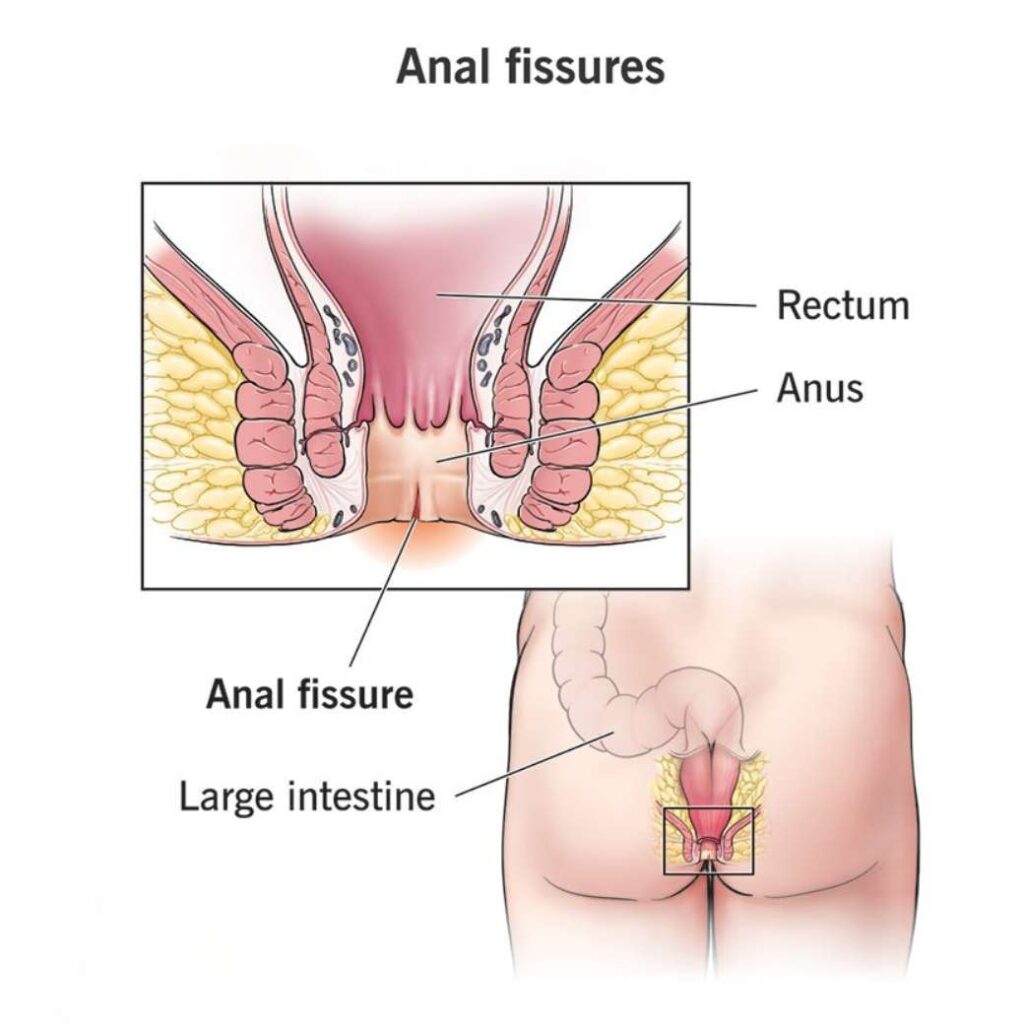
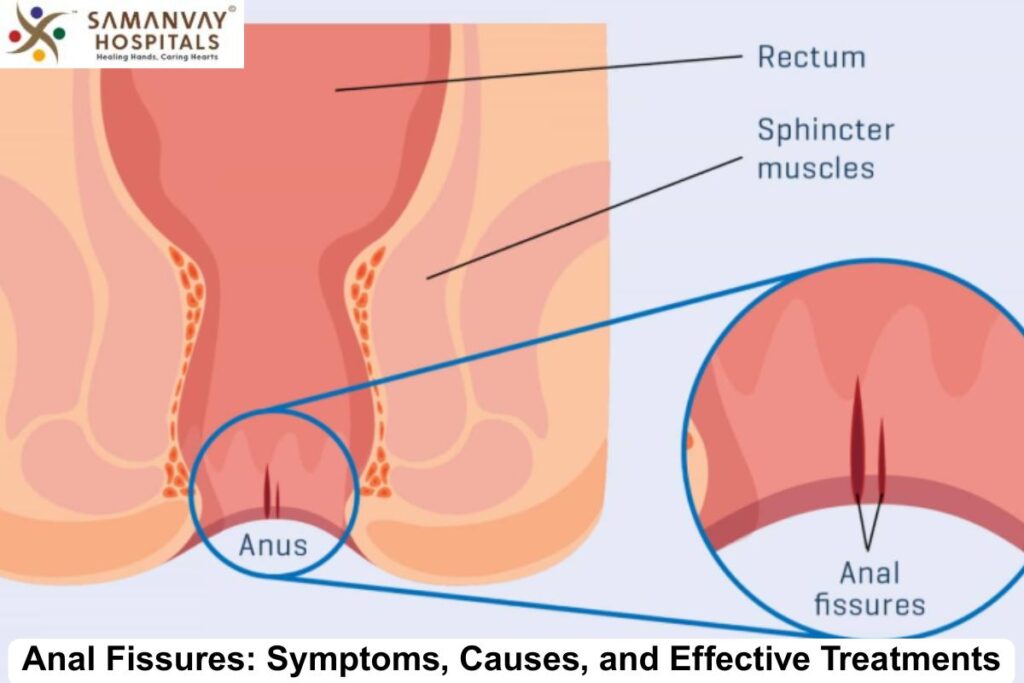
An anal fissure is a small tear in the lining of the anus, typically caused by passing hard or large stools. These tears can result in pain, bleeding, and discomfort during or after bowel movements. Although they are common and usually heal on their own, anal fissures may require medical treatment.
Anal fissures can affect individuals of all ages, including infants, and are often mistaken for hemorrhoids. The fissure usually occurs in the posterior midline of the anus, where blood flow is lowest and healing tends to be slower.
Why it Matters
While anal fissures are not dangerous, they can be very painful and affect quality of life. If the tear does not heal within 6–8 weeks, it is considered chronic and may involve underlying muscle spasms that impair healing. Identifying and treating fissures early can prevent prolonged symptoms and reduce the need for invasive procedures.
Common Symptoms
Sharp pain during or after bowel movements
Bright red blood on toilet paper or stool
A visible tear or crack in the skin around the anus
Itching or irritation
A small lump or skin tag near the fissure
Diagnosis
Visual inspection by a healthcare provider
Digital rectal exam (often avoided if too painful)
Anoscopy (may be used in chronic cases)
Treatment Options
Initial care: High-fiber diet with fiber supplement, increased fluid intake, sitz baths
Topical treatments: Nitrate ointments or calcium channel blockers to relax anal sphincter muscle and promote blood flow
Pain relief: Over-the-counter analgesics
Botulinum toxin injection: In some cases may be used to relax the sphincter and support healing
Surgery (lateral internal sphincterotomy): Considered for fissures that do not heal with other treatments