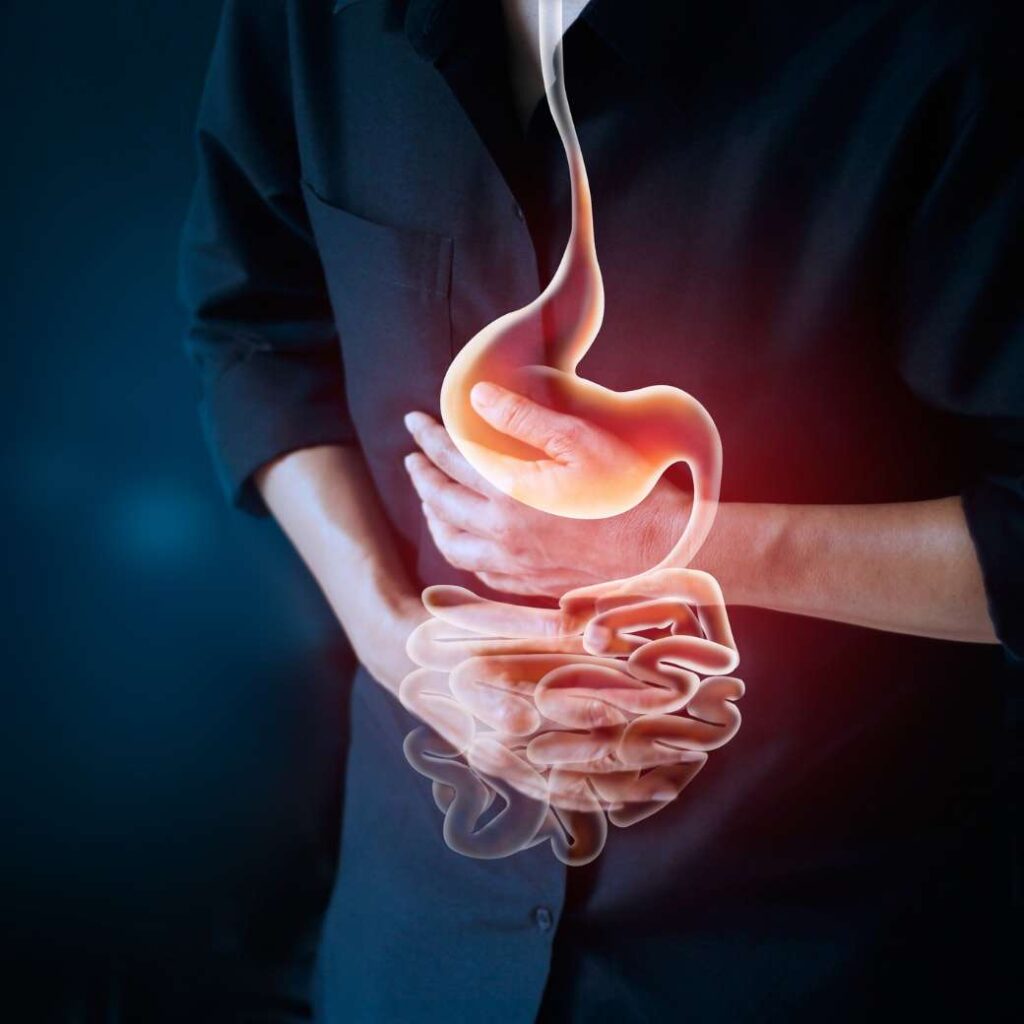
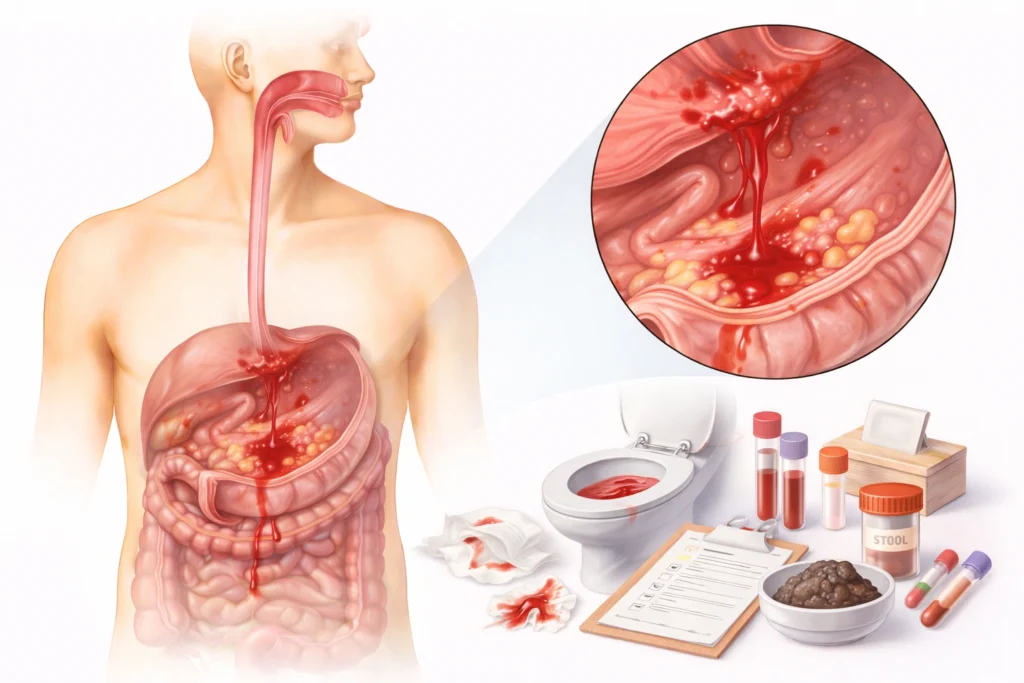
Gastrointestinal (GI) bleeding refers to any bleeding that occurs in the digestive tract, from the esophagus to the rectum. It can be classified as upper GI bleeding (originating in the esophagus, stomach, or early segment of the duodenum) or lower GI bleeding (from the small intestine, colon, or rectum). The bleeding may be visible (e.g., blood in vomit or stool) or hidden and detected only through tests.
Some GI bleeds are mild and self-limiting, but others can be life-threatening and require urgent medical care. Rapid identification of the source and severity is critical to guide treatment and prevent complications such as anemia, shock, or death. GI bleeds should never be ignored.
Common Presentation
Fatigue or weakness
Dizziness or lightheadedness
Shortness of breath
Abdominal pain or cramping
Nausea
Hematemesis(vomiting blood, which may appear bright red or “coffee-ground” in color).
Melena (black and tarry stools) or dark stools
Hematochezia (bright red or maroon blood in the stool, more common with lower GI bleeding.
Management
Gastrointestinal (GI) bleeding is a potentially serious condition that requires prompt medical attention. Treatment depends on the location, cause, and severity of the bleeding.
In severe cases, immediate care may include:
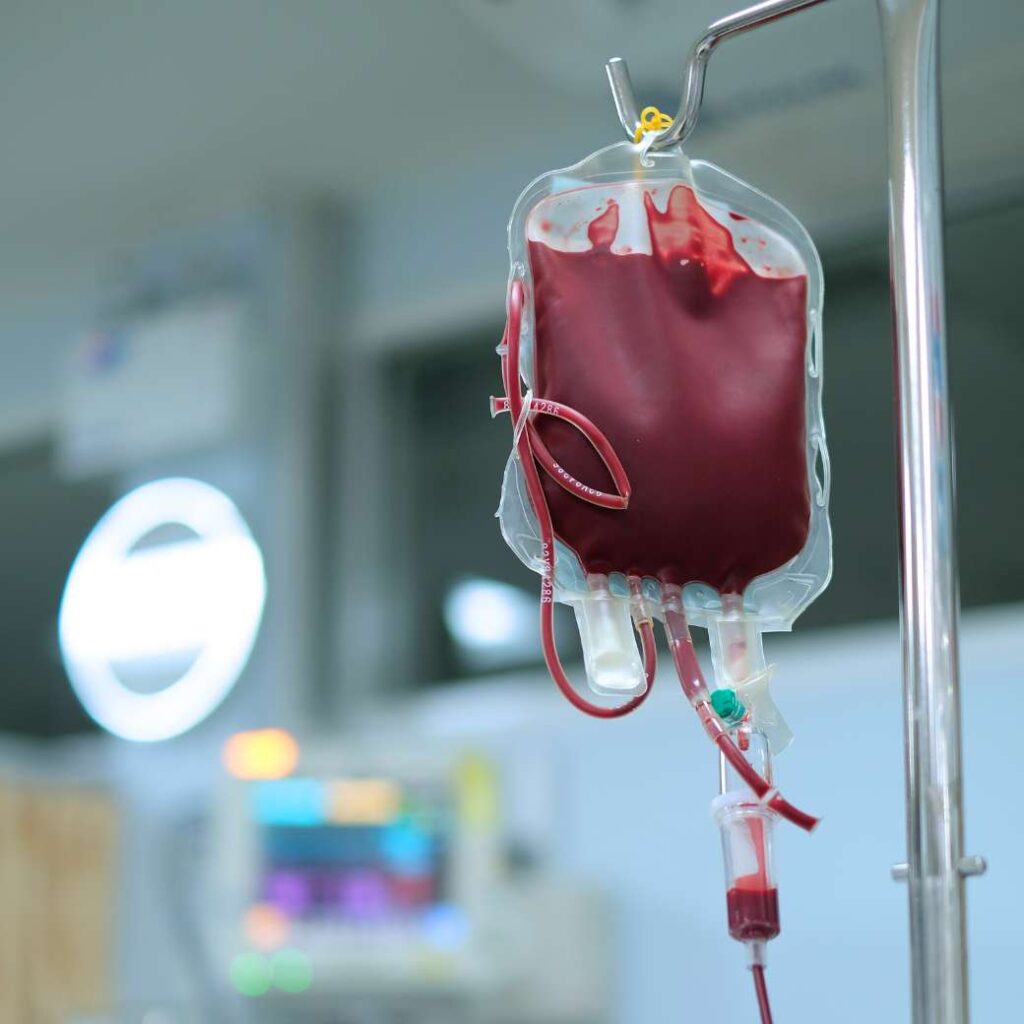
IV fluids or blood transfusions to treat blood loss
Hospitalization for monitoring and urgent treatment
Endoscopy/Colonoscopy to locate and stop the bleeding
In cases where the source isn’t found via endoscopy, capsule endoscopy, CT angiography or a nuclear scan may help locate the bleeding.
Depending on the cause, medications may include:
Proton Pump Inhibitors (PPIs) – reduce stomach acid for ulcers or gastritis