A gastroparesis diet is a special eating plan designed for individuals with gastroparesis, a condition in which the stomach empties food into the small intestine slower than normal. This delayed gastric emptying can lead to symptoms such as nausea, bloating, early satiety, abdominal pain, and vomiting.
The goal of the diet is to reduce symptoms by making digestion easier and more efficient. It focuses on low-fat, low-fiber, and easily digestible foods, eaten in small, frequent meals.
Why It Matters
Gastroparesis can interfere with proper nutrition and blood sugar control (especially in diabetic patients). The right dietary strategy helps manage symptoms, prevent malnutrition, and reduce hospitalizations.
It may be used alongside medications that improve motility or reduce nausea.
Core Guidelines
Foods to Include
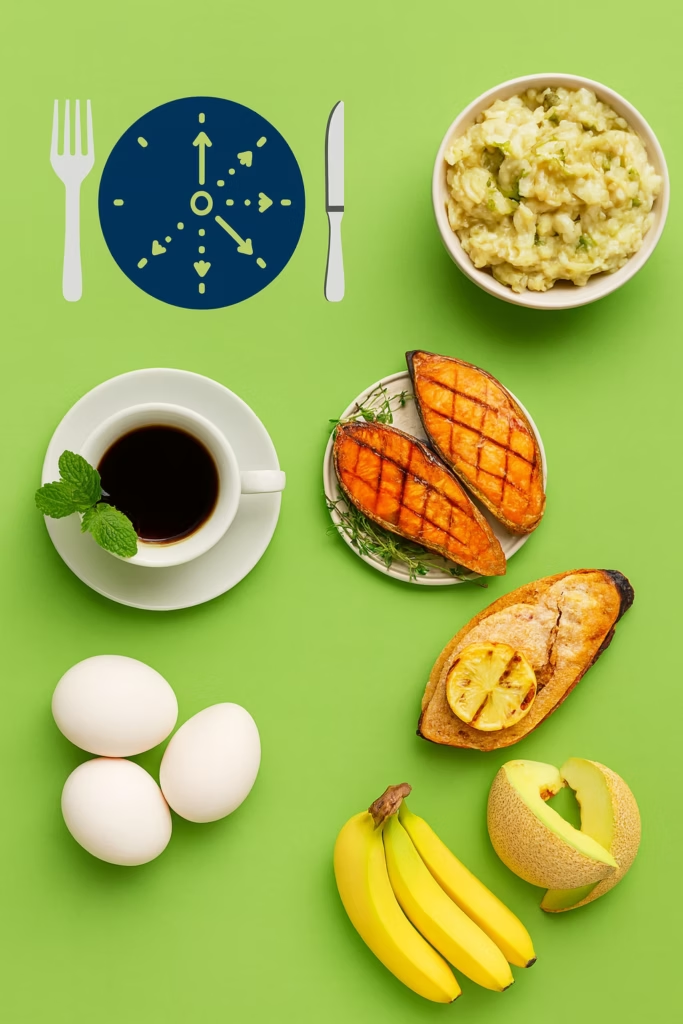
Eat small, frequent meals (4–6 times a day)
Chew thoroughly and eat slowly
Choose low-fat foods (fat slows digestion); however, aim for two serving of heart-healthy fats daily such as avocado, extra virgin olive oil and nut butters.
Limit insoluble fiber (high fiber slows emptying and may form bezoars) – such as raw cabbage, broccoli, lettuce, onions, and peppers; the skins and seeds of fruits such as oranges; and legumes including beans, lentils, chickpeas, and peas.
Cook or roast vegetable (great fiber source) and consider puree.
Drink liquids between meals, not with meals
Aim for 5+ fruits/vegetables daily
Aim for more than 50 grams of lean protein daily
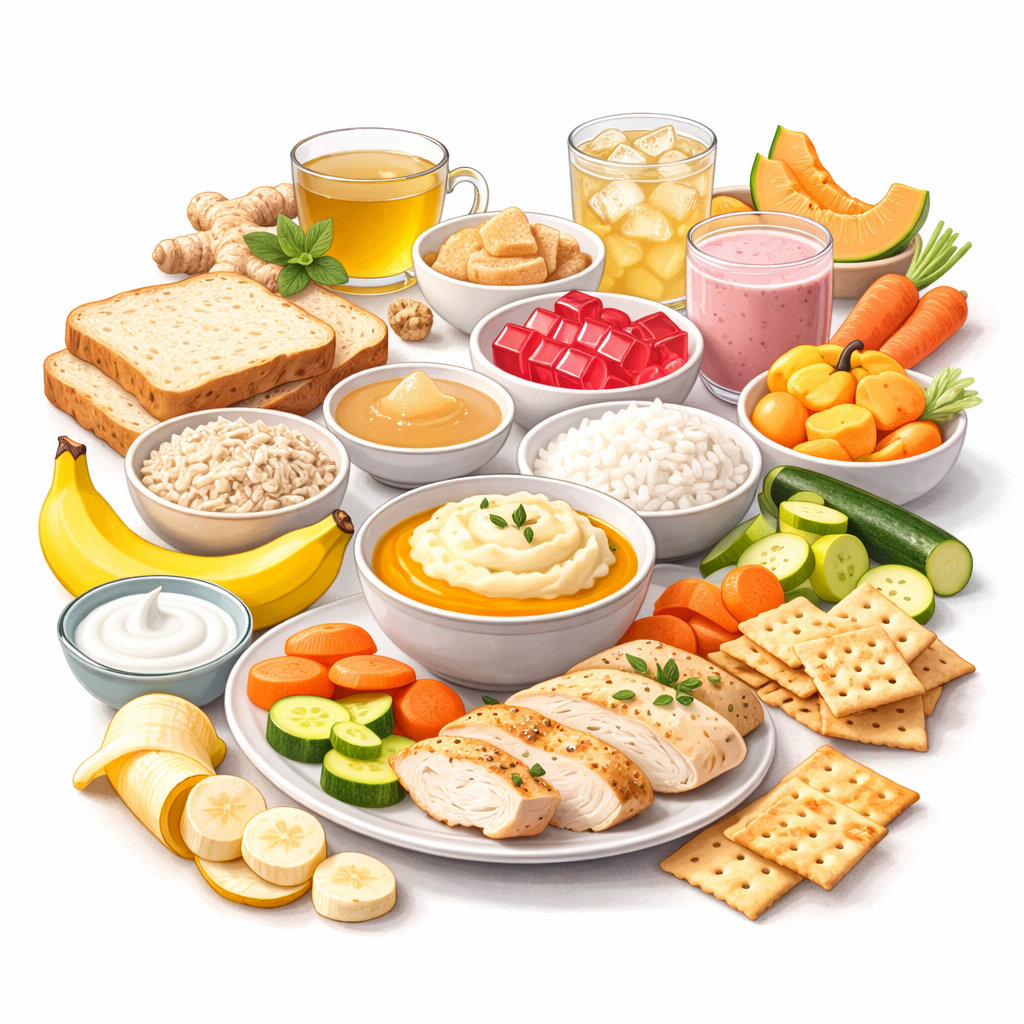
Recommended
White bread, white rice, and pasta
Cooked/steamed vegetables (peeled, soft)
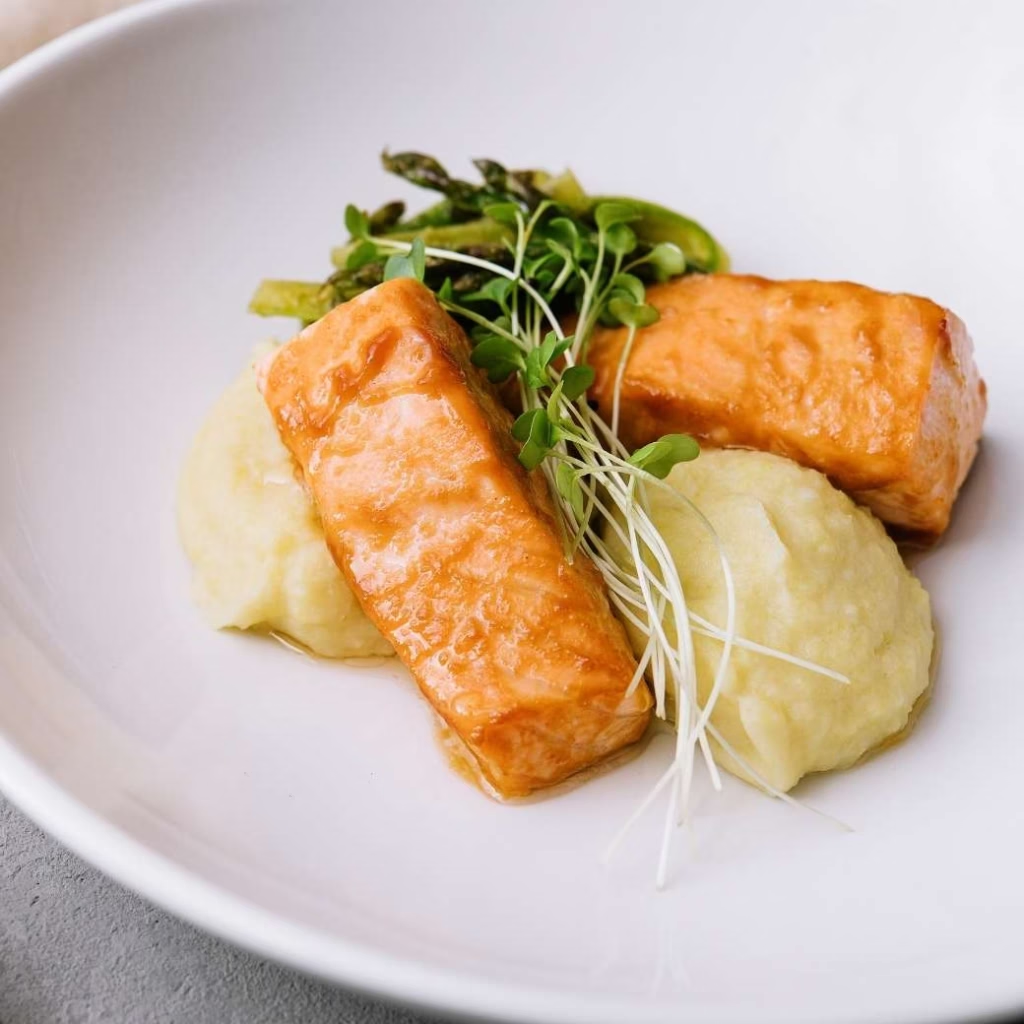
Lean poultry, fish, eggs
Applesauce, bananas
Broths, low-fat soups
Avoid
Whole grains, bran cereal
Raw vegetables, tough skins
Fried or fatty meats
Raw apples, citrus fruits, dried fruits
Creamy or high-fat soups
Liquids and pureed foods are often better tolerated and may be emphasized during symptom flares.
Additional Tips
Avoid carbonated beverages (increase bloating)
Short bouts of walking after meals can improve gastric emptying.
Blend fruits such as berries, mango, bananas into smoothies and add spinach or avocado.
Monitor weight and nutrient intake with your healthcare provider and nutritionist. Consider nutritional shakes (e.g. Ensure, Boost — low-fat, low-fiber versions) if there is weight loss.
Consider vitamin and mineral supplements if intake is restricted.